Cities have moods, but we don't see them.
What everyone else measures
TEMPERATURE: 23°C
NOISE LEVEL: 65 dB
LOCATION: Mitte, Berlin
POPULATION DENSITY:
13,000/km²
HUM shows how
a place feels right now.
CONCEPT
HUM - A shared emotional layer of the city


Opens the app and takes
in the intro animation.
Shows how the current area feels,
and saves it using the icon
in the top right.


Checks the rest of Berlin — Mitte looks
calm, so heads out to see it in person.
Gets to Mitte and spends some time on
the streets, doing a bit of shopping.
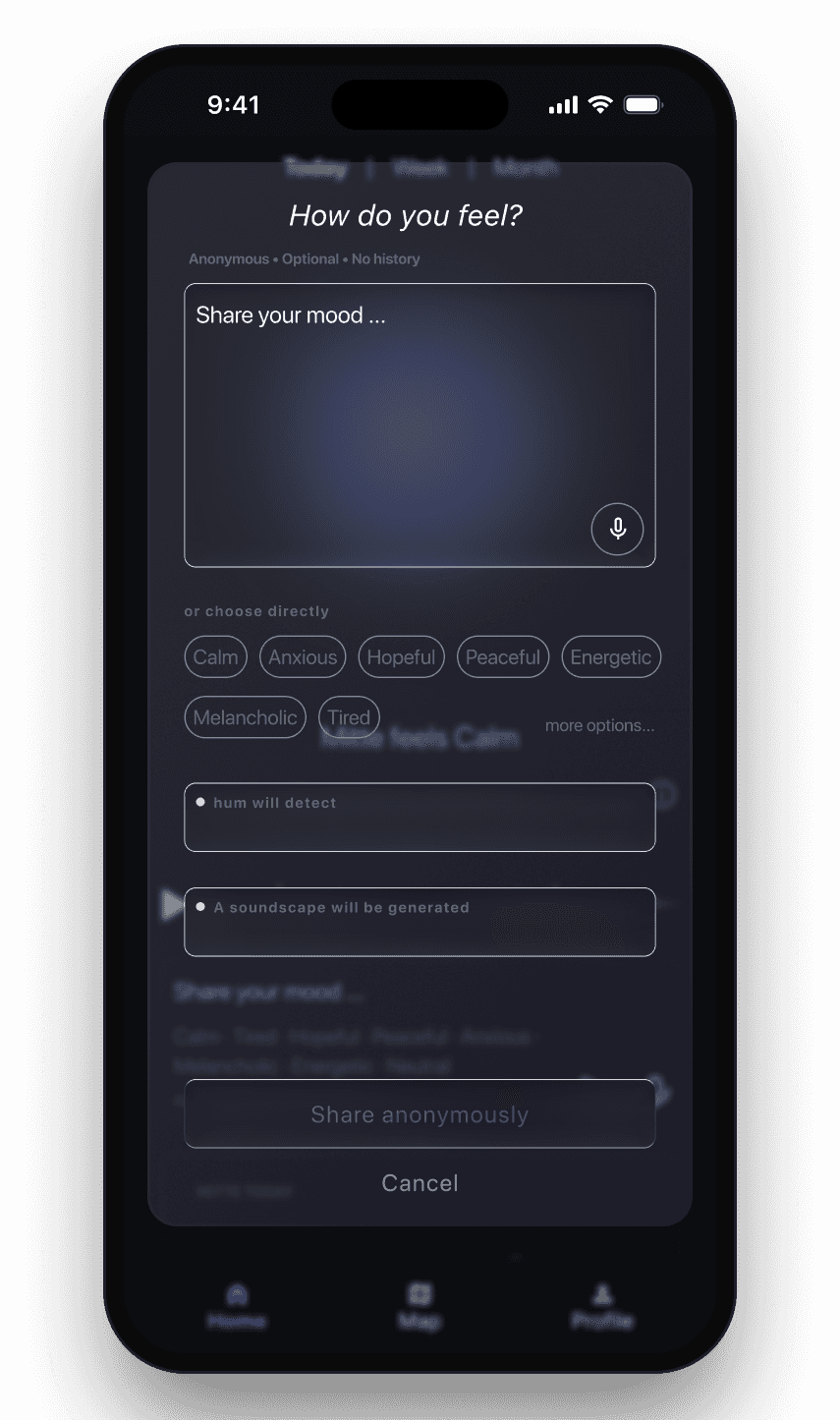

After some time in Mitte, opens the
feeling page to log how it feels
being there.
Taps the mic icon and talks
through the feeling.
HUM listens in to make sense of it.


HUM suggests a feeling and
turns it into a short song.
Later, checks back on Pankow —
the place saved earlier —
to see how it's feeling now.
Key Takeaways
Designing for collective, not individual
Most UX focuses on personal journeys. HUM required thinking about groups without exposing individuals.
Abstraction as a UX tool
The orb communicates more than a chart ever could.
Ethics built into the system
Anonymity wasn't a feature — it was the foundation of every design decision.