HUM
Translating Emotion into Urban Atmosphere
VISUALIZATION
Berlin · Spandau · Pankow — each district feels different.
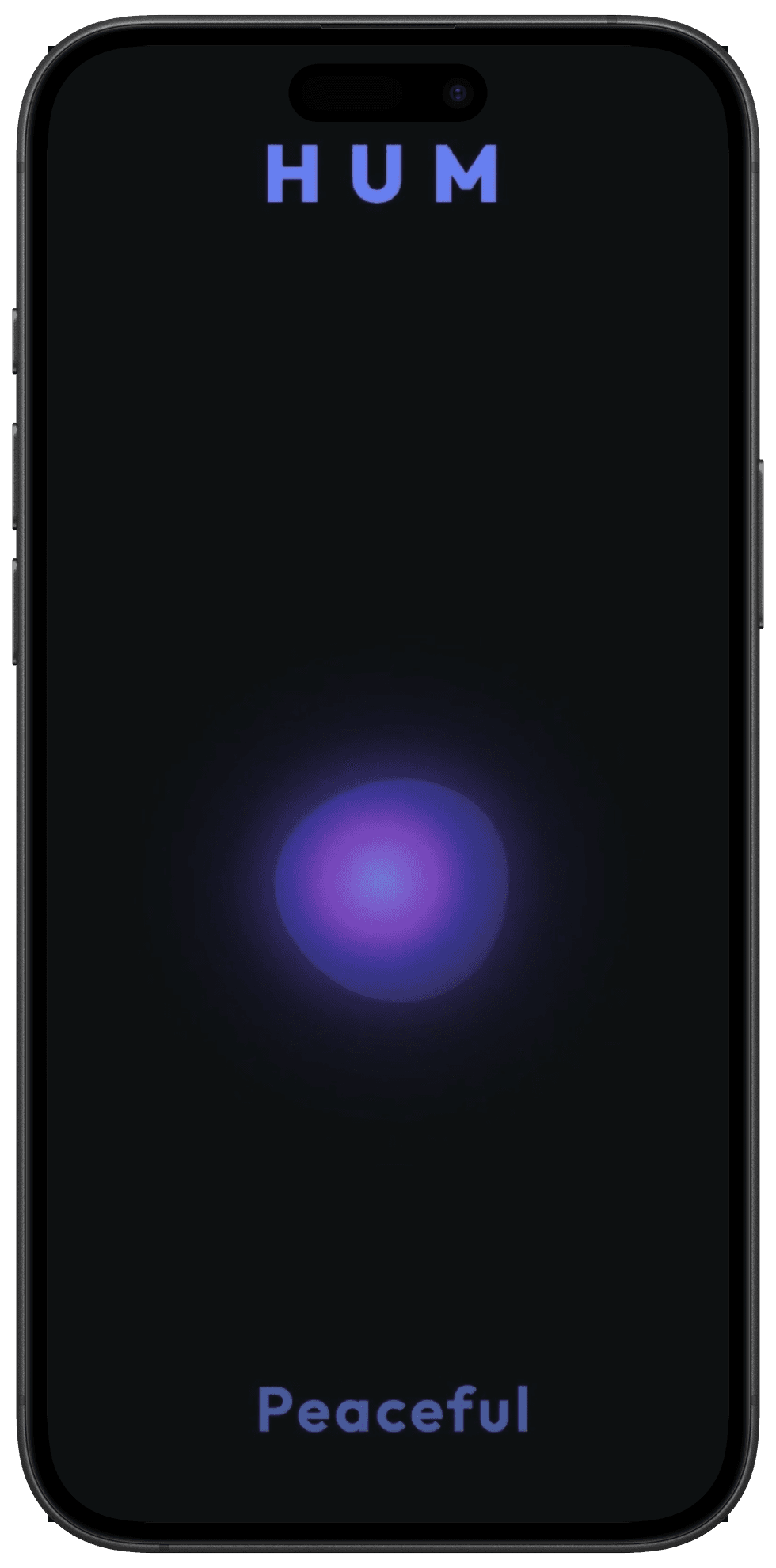
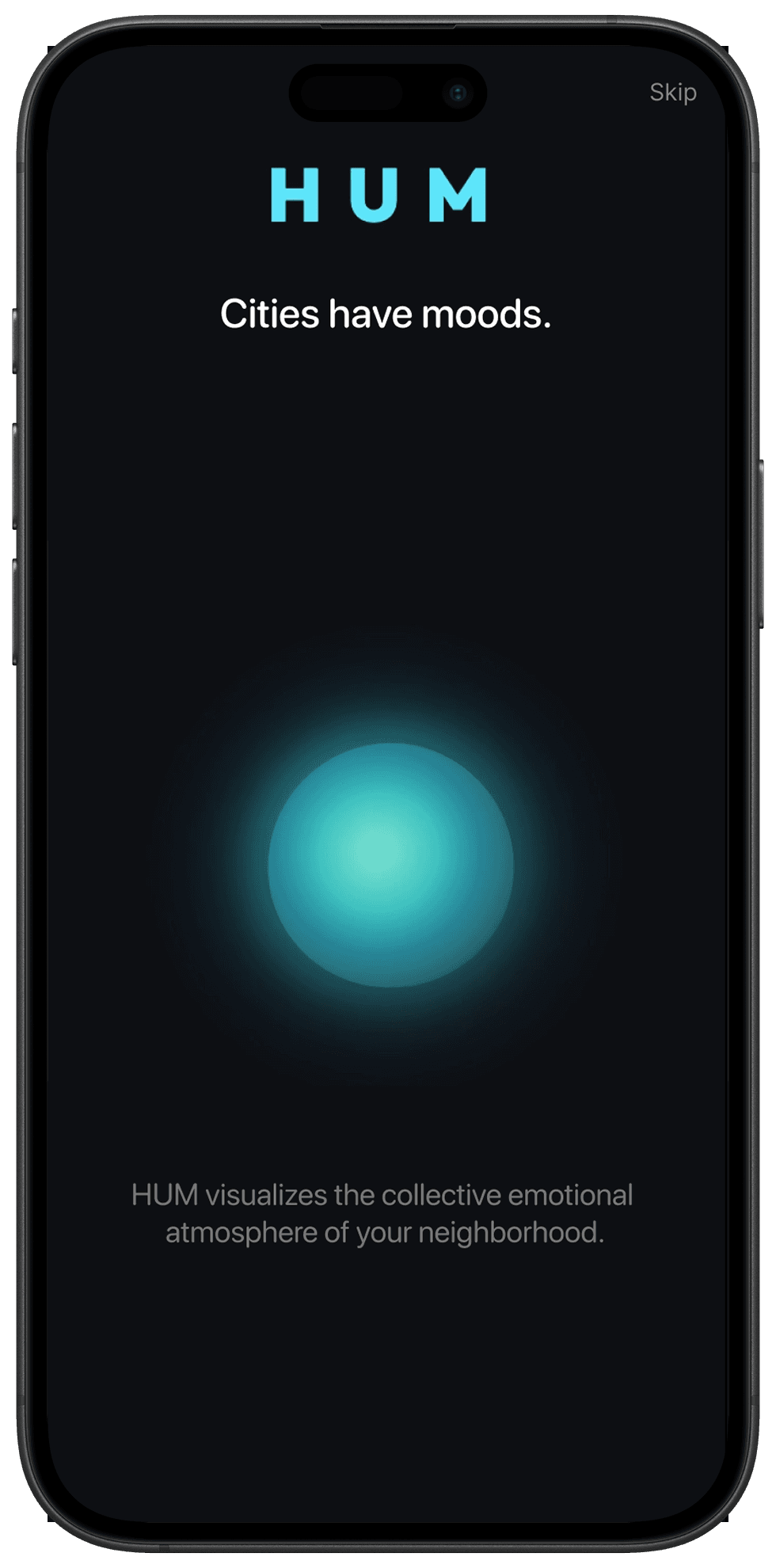
HUM begins with atmosphere, not explanation. A single ambient form conveys the city’s emotional state, letting users feel it before they understand it. Context is introduced gently, without disrupting the mood.
Designed by Merve Kartal · Experience Design MA · Berlin, 2026
Cities have moods, but we don't see them.
Cities have moods, but we don't see them.
WHAT WE MEASURE
TEMPERATURE: 23°C
NOISE LEVEL: 65 dB
LOCATION: Mitte, Berlin
POPULATION DENSITY: 13,000/km²
WHAT WE MEASURE
TEMPERATURE: 23°C
NOISE LEVEL: 65 dB
LOCATION: Mitte, Berlin
POPULATION DENSITY: 13,000/km²
How It Works
Step 1 — Free Expression
Users share how they feel — by voice or text, in whatever words come naturally.
Step 2 — AI Interpretation
HUM's AI distills the input into a 1–2 word emotional tag. Original entry never stored.
Step 3 — Collective Atmosphere
The tag maps to the user's location and merges with others — building a living city mood.
Each neighbourhood develops its own emotional signature, expressed through colour, shape, and motion rather than numbers.
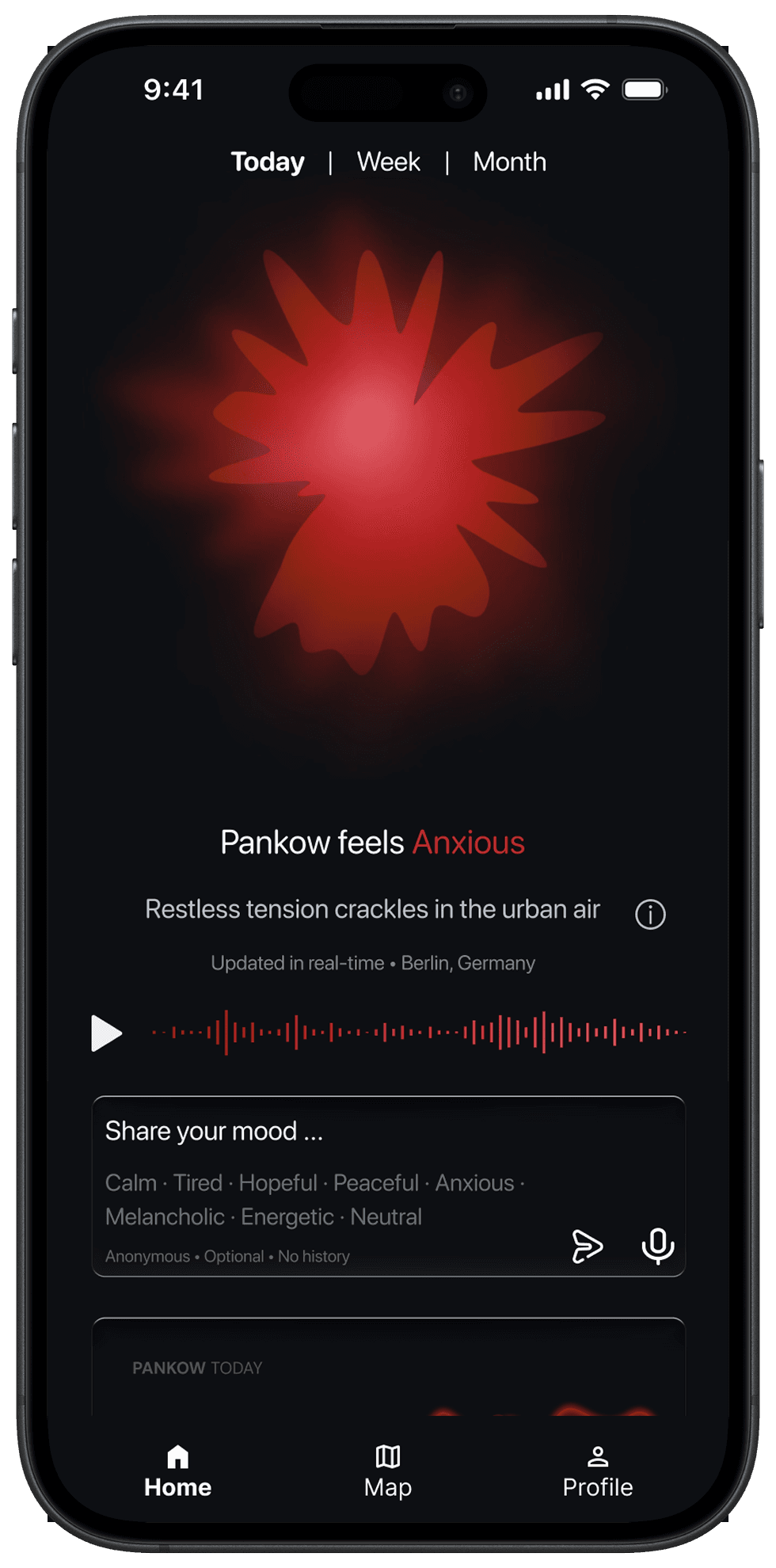
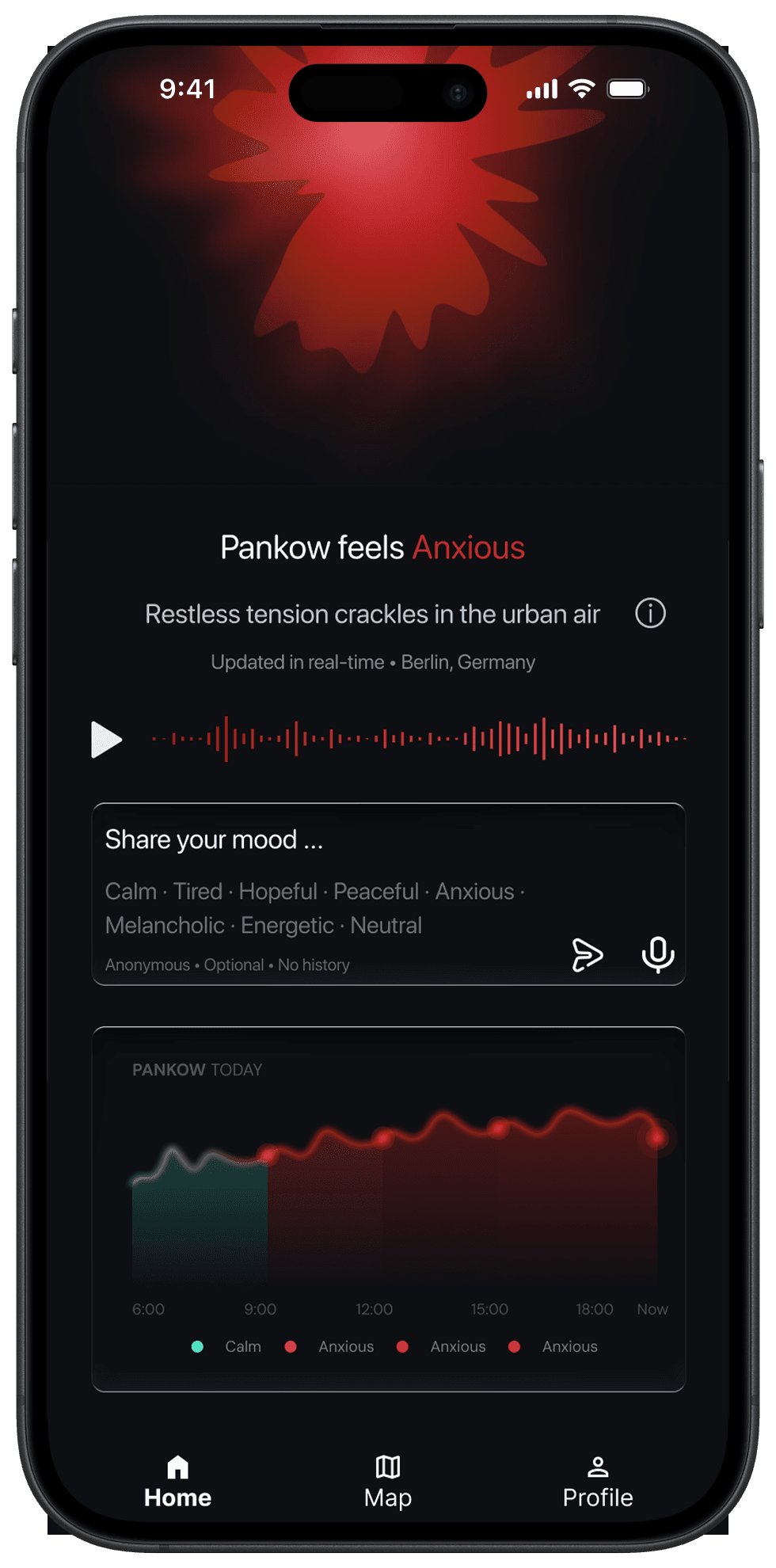
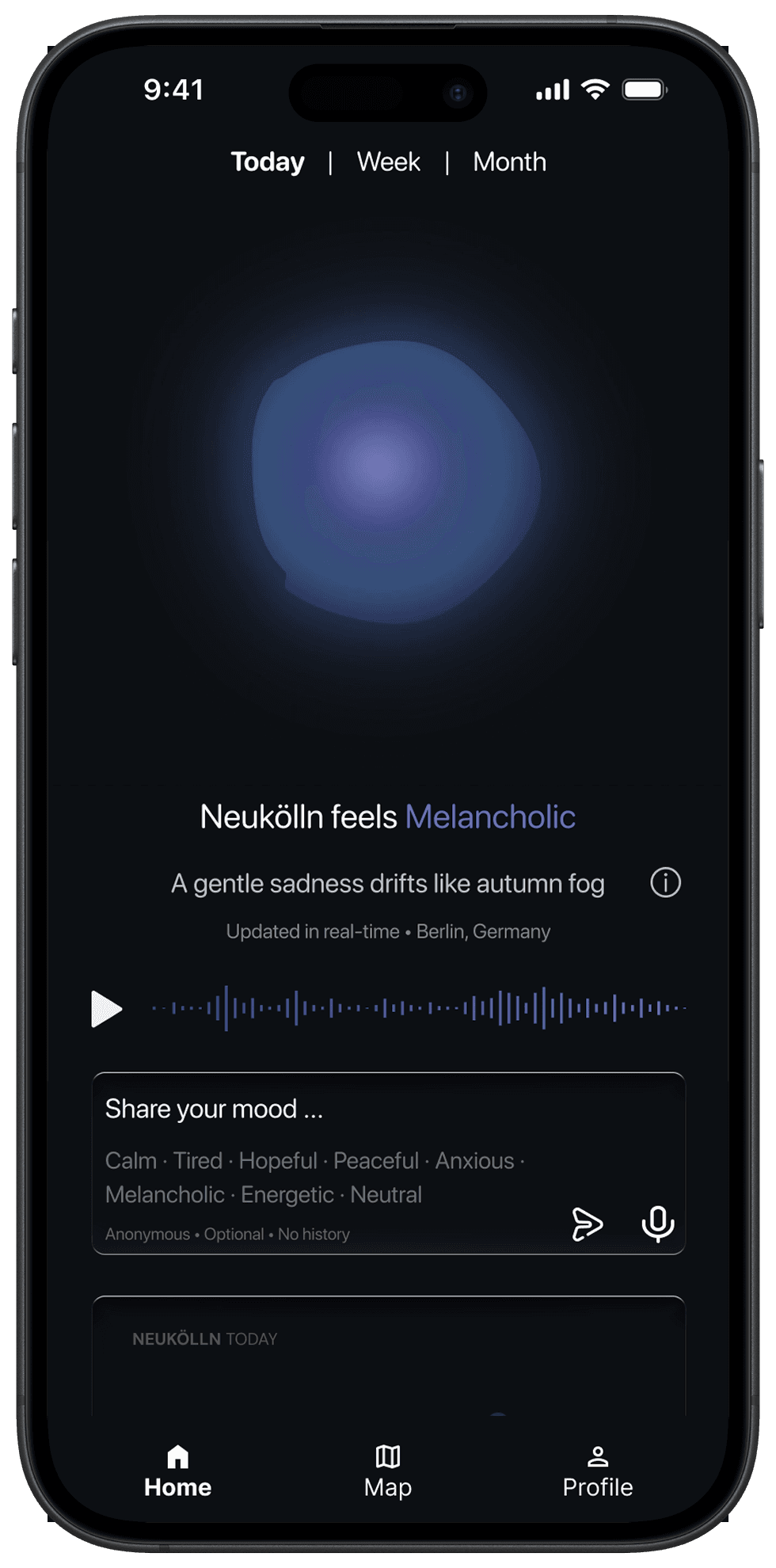
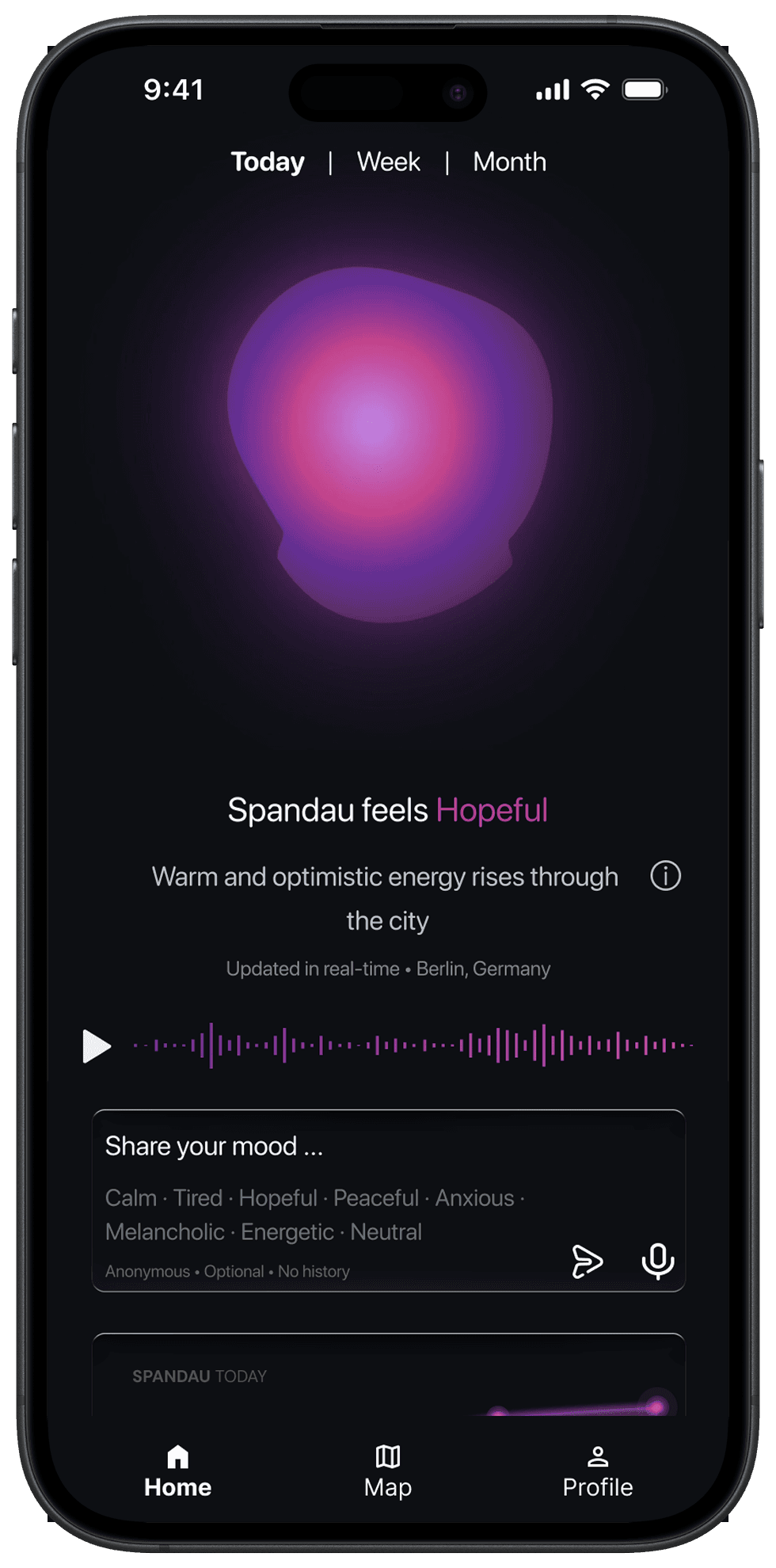
Emotion is introduced visually first. Through colour, softness, and motion, the blob gives each neighbourhood a distinct identity and helps users read mood patterns intuitively.
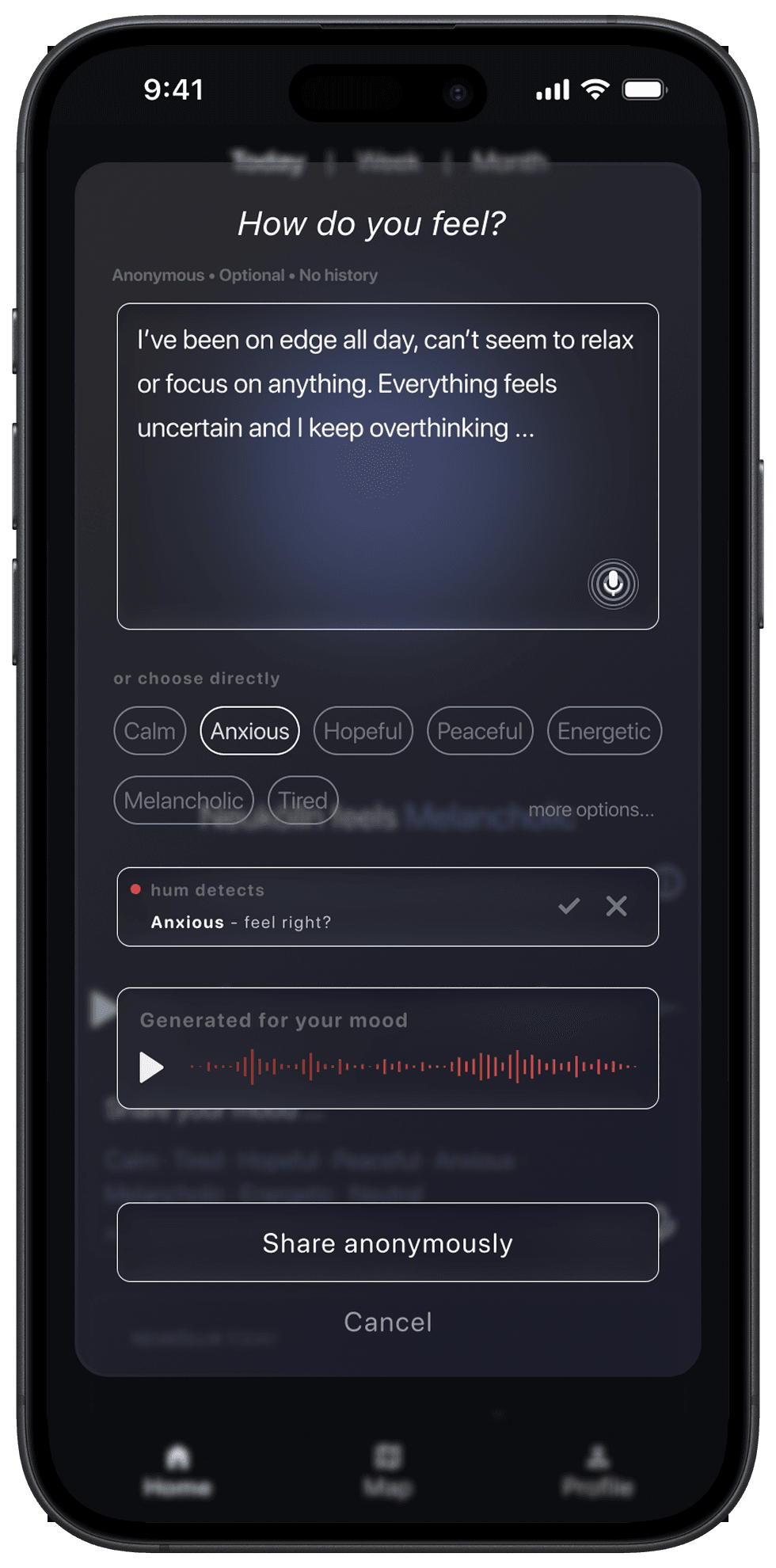
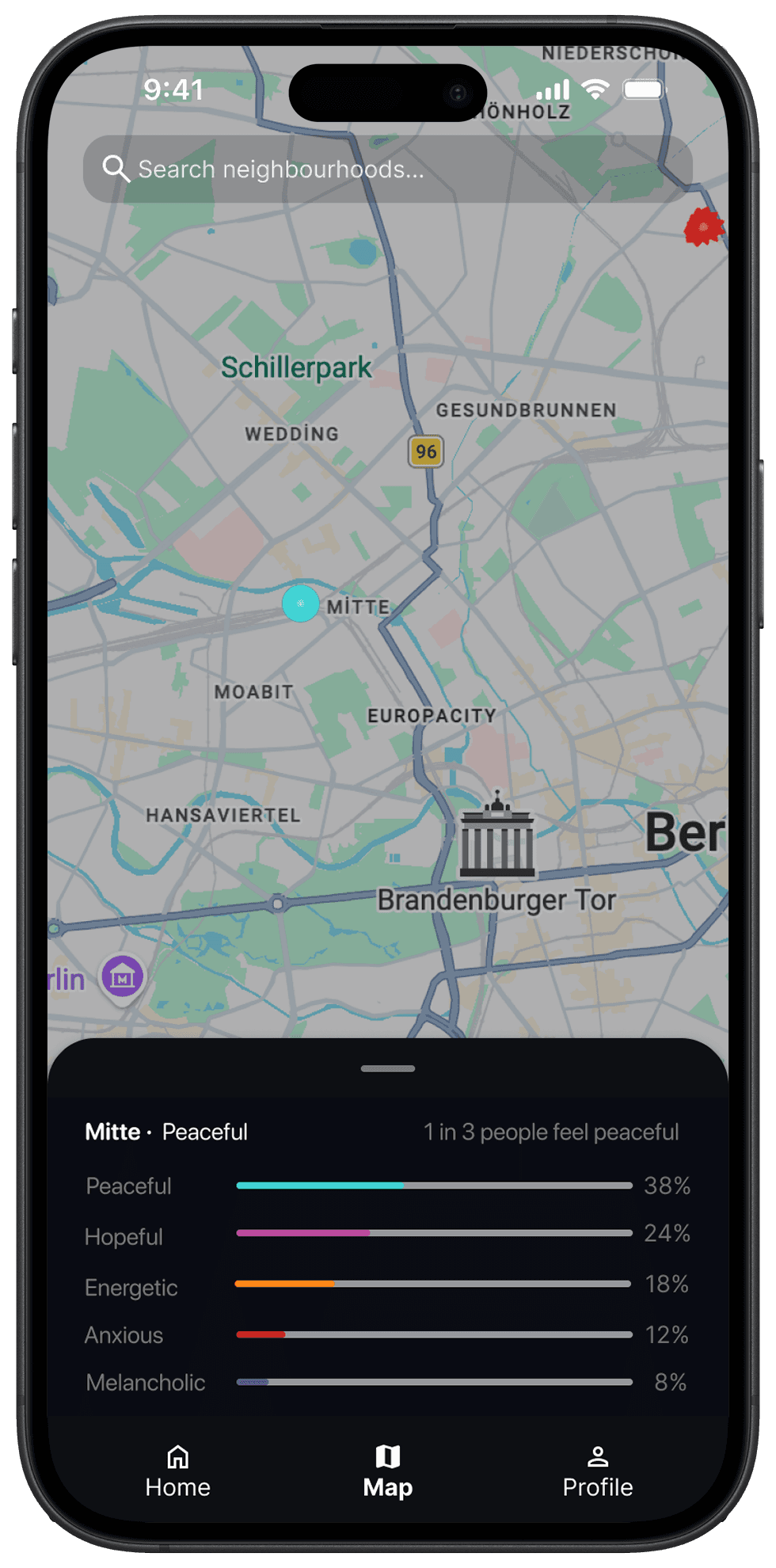
Sharing feels simple and low-pressure, without forcing users into strict categories. The map gives those emotions a spatial layer, helping users see where different moods are surfacing.
Key Takeaways
Designing for collective, not individual
Most UX focuses on personal journeys. HUM required thinking about groups without exposing individuals.
Abstraction as a UX tool
The orb communicates more than a chart ever could.
Ethics built into the system
Anonymity wasn't a feature — it was the foundation of every design decision.
CONCEPT
HUM - A shared emotional layer of the city
Anonymous
Emotional inputs are shared
without history, or traceability.
Collective
Individual expressions are
never shown on their own.
AI aggregates inputs into
a shared emotional atmosphere.
Abstract
Emotions are translated into
abstract forms and sound,
avoiding literal labels.
VISUALIZATION
Berlin · Spandau · Pankow — each district feels different.
Anonymous
Emotional inputs are shared without history, or traceability.
Collective
Individual expressions are
never shown on their own. AI aggregates inputs into a shared emotional atmosphere.
Abstract
Emotions are translated into abstract forms and sound, avoiding literal labels.
How It Works
Step 1 — Free Expression
Users share how they feel — by voice or text, in whatever words come naturally.
Step 2 — AI Interpretation
HUM's AI distills the input into a 1–2 word emotional tag. Original entry never stored.
Step 3 — Collective Atmosphere
The tag maps to the user's location and merges with others — building a living city mood.
HUM begins with atmosphere, not explanation. A single ambient form conveys the city’s emotional state, letting users feel it before they understand it. Context is introduced gently, without disrupting the mood.
Emotion is introduced visually first. Through colour, softness, and motion, the blob gives each neighbourhood a distinct identity and helps users read mood patterns intuitively.
Sharing feels simple and low-pressure, without forcing users into strict categories. The map gives those emotions a spatial layer, helping users see where different moods are surfacing.
Key Takeaways
Designing for collective, not individual
Most UX focuses on personal journeys. HUM required thinking about groups without exposing individuals.
Abstraction as a UX tool
The orb communicates more than a chart ever could.
Ethics built into the system
Anonymity wasn't a feature — it was the foundation of every design decision.
Anonymous
Emotional inputs are shared without history, or traceability.
Collective
Individual expressions are
never shown on their own. AI aggregates inputs into a shared emotional atmosphere.
Abstract
Emotions are translated into abstract forms and sound, avoiding literal labels.
How It Works
Step 1 — Free Expression
Users share how they feel — by voice or text, in whatever words come naturally.
Step 2 — AI Interpretation
HUM's AI distills the input into a 1–2 word emotional tag. Original entry never stored.
Step 3 — Collective Atmosphere
The tag maps to the user's location and merges with others — building a living city mood.
Each neighbourhood develops its own emotional signature, expressed through colour, shape, and motion rather than numbers.
Each neighbourhood
has its own emotional
signature.
HUM introduces itself cities feel, and now you can too.
Each neighbourhood
has its own emotional
signature.
The blob speaks before
words do.
Colour, shape, and motion
carry the emotional weight
of a place.
Key Takeaways
Designing for collective, not individual
Most UX focuses on personal journeys. HUM required thinking about groups without exposing individuals.
Abstraction as a UX tool
The orb communicates more than a chart ever could.
Ethics built into the system
Anonymity wasn't a feature — it was the foundation of every design decision.
Designed by Merve Kartal · Experience Design MA · Berlin, 2026